





Arm pain, numbness, weakness, and coordination problems can occur when nerves or the spinal cord in the neck become irritated or compressed. Our goal is to identify the cause of neurologic cervical symptoms, guide patients through appropriate conservative care when possible, and offer advanced surgical treatment when necessary.
👉 Request an Appointment
👉 Refer a Patient
Causes
Cervical neurologic symptoms are typically caused by a nervous system problems related to compression of the spinal cord or nerve roots.
Please review our information on cervical spine anatomy.
Possible areas of compression (with associated pathology):
- Neural foramina
- Openings where nerves exit the spine.
- Can become narrowed by disc herniation, bone spurs, or degenerative changes
- Nerve root becomes compressed -> cervical radiculopathy(see below)
- Central canal
- Opening where the spinal cord travels
- Can become narrows by disc herniation / bulging, overgrown facets, degenerative changes, poor alignment
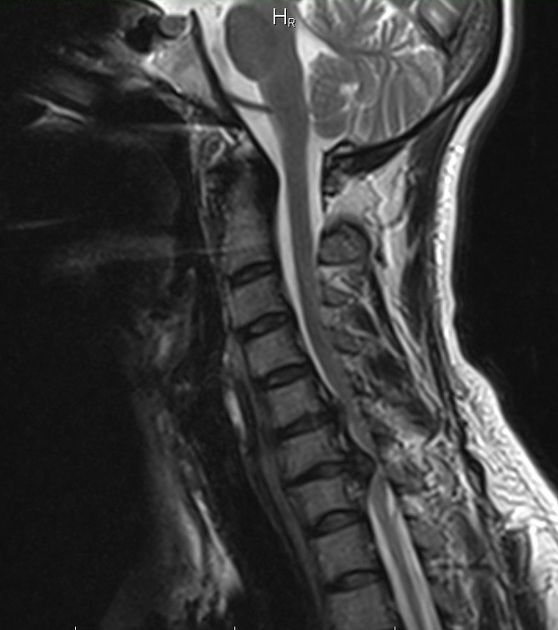
- Spinal cord becomes compressed -> cervical myelopathy (see below)
Symptoms
Below are some of the typical presenting cervical neurologic symptoms:
Cervical radiculopathy
Cervical radiculopathy refers to irritation or compression of a single nerve root.
Common features:
- radiating arm pain
- numbness or tingling
- weakness in a specific muscle group
- symptoms following a predictable nerve pattern
Cervical myelopathy
Cervical myelopathy occurs when the spinal cord itself becomes compressed.
This condition may progress gradually or rapidly.
Common features:
- loss of hand dexterity
- difficulty with buttons or writing
- balance problems
- stiffness in the legs
- gait instability
Conditions
Below are some of the main causes of neurologic cervical symptoms
- Cervical Arthritis
- Disc Degeneration
- Cervical disc herniation
- Cervical Fracture
- Cervical Instability
- Spine tumor
- Spine infection
Treatment
Preventative
Please see other section on preventative care for spinal disease. Below are some more specific recommendations for cervical spine care:
- Posture and ergonomics: Small changes in workstation setup, monitor height, phone use, and driving position can reduce repetitive strain.
- Activity modification: Avoiding repeated aggravating movements during flare-ups.
- Sleep positioning: Supportive pillows and avoiding sustained neck rotation or excessive flexion may reduce overnight strain.
- Strength and mobility: A guided or self directed program can improve muscular support and restore range of motion.
- General wellness: Sleep, health diet, avoid nicotine, everything in moderation
Conservative
Please see other section on conservative care for spinal disease. Below are some more specific recommendations for cervical spine care:
- Immobilization: Limited short-term support may be helpful, though prolonged immobilization is usually avoided.
- Physical therapy: Focuses on posture, cervical mobility, deep neck flexor strengthening, scapular stabilization, and home exercise strategies. Typically the most important conservative care option.
- Chiropractic care: Focuses on alignment and non-procedural options. Can be very useful for chronic pain that is refractory to therapy.
- Home exercise program: Best if planned by physical therapy, but this is not always possible. Click here for our general recommendations for home exercises for neck pain
- Medication: anti-inflammatory medications, nerve pain medication, steroids
- Heat / Ice
Procedural
Please see other section on procedures for spinal disease. Below are some more specific recommendations for cervical spine care:
- Cervical epidural steroid injections: Used to reduce inflammation around a compressed nerve root.
- Selective nerve root blocks: Helps confirm the source of nerve irritation and may provide symptom relief.
- Facet injections or medial branch procedures: These may be considered when both mechanical and neurologic pain patterns overlap.
We do not perform injections, however, we partner with several pain management physicians and can help guide you in the right direction.
Surgical
When surgery may be considered
- neurologic symptoms are progressive
- significant spinal cord compression is present
- weakness is worsening
- conservative care fails to provide relief
- structural compression is clearly identified
Possible surgical strategies
- decompression
- instrumentation
- fusion
- stabilization
- correction of structural pain generators
Please review our section on cervical spine surgery for more information.
Evaluation
A careful evaluation is essential to determine whether nerves or the spinal cord are involved.
Typical evaluation may include:
- detailed symptom history
- neurologic examination
- strength and reflex testing
- balance and gait evaluation
- imaging studies such as MRI or CT
- X-rays to assess alignment
- diagnostic injections in selected cases
Emergency warning signs
Please follow this link to see when to seek emergency care.
Frequently asked questions
Is arm pain always caused by a pinched nerve?
Not always, but radiating arm pain is often associated with irritation of a cervical nerve root.
Can neurologic cervical symptoms improve without surgery?
Yes. Many patients improve with conservative care, depending on the cause and severity of nerve compression.
What is cervical myelopathy?
Cervical myelopathy occurs when the spinal cord becomes compressed in the neck, which can affect coordination, balance, and hand function.
When should I see a spine specialist?
If neurologic symptoms persist, worsen, or affect strength, coordination, or balance, specialist evaluation is recommended.