





Identifying the Source of Spine Pain
When standard imaging does not provide clear answers, discography can help identify whether a spinal disc is the true source of pain.
Discography is a specialized diagnostic procedure used to evaluate painful spinal discs by reproducing symptoms under carefully controlled conditions.
This test can provide important information when planning treatment for chronic neck or back pain.
👉 Request an Appointment
👉 Refer a Patient
What Is Discography?
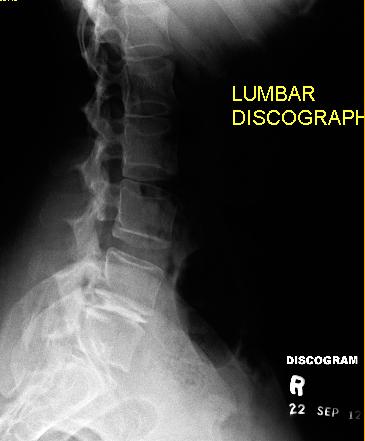
Discography (also called a discogram) is a minimally invasive diagnostic test used to determine whether one or more spinal discs are causing pain.
The procedure involves placing a small needle into the center of a spinal disc and gently injecting contrast dye while monitoring your response.
This allows your physician to evaluate:
- Whether the disc reproduces your typical pain
- The structural integrity of the disc
- Whether a disc abnormality seen on MRI is actually causing symptoms
Discography helps answer an important question:
“Is this disc truly responsible for your pain?”
Understanding the Role of Spinal Discs
Spinal discs act as cushions between the vertebrae.
They help:
- Absorb shock
- Maintain flexibility
- Allow movement
- Protect spinal structures
Over time, discs can develop:
- Degeneration
- Tears in the outer layer (annulus)
- Internal disruption
- Collapse
Not every abnormal-looking disc causes pain.
Discography helps distinguish:
✓ Symptomatic discs (pain-generating)
from
✓ Asymptomatic discs (abnormal but not painful)
Why Might Discography Be Recommended?
Discography is typically used when symptoms persist but standard imaging does not provide enough information.
Your physician may recommend discography if:
You have chronic neck or back pain
Pain lasting several months despite treatment
MRI or CT findings are unclear
Imaging may show multiple abnormal discs
Surgery is being considered
Precise identification of the pain source is essential before spinal fusion or disc surgery
Previous treatments have not worked
Including injections, therapy, or medications
Conditions Discography Helps Evaluate
Discography may be used to evaluate:
Degenerative Disc Disease
Age-related disc breakdown
Internal Disc Disruption
Small tears within the disc causing pain
Discogenic Back Pain
Pain originating directly from the disc
Failed Prior Surgery
Determining whether persistent symptoms are coming from an untreated disc level
What Happens During the Procedure?
Discography is typically performed in an outpatient setting.
Step 1: Preparation
You may receive:
- IV access
- Mild sedation
- Local numbing medication
You will remain awake enough to describe symptoms during testing.
Step 2: Needle Placement
Using live X-ray guidance (fluoroscopy), a physician carefully places a small needle into the disc.
Step 3: Contrast Injection
A small amount of contrast dye is injected into the disc.
You will be asked:
“Does this reproduce your typical pain?”
This is one of the most important parts of the test.
Step 4: Imaging Review
The physician evaluates:
- Pressure within the disc
- Dye spread pattern
- Structural abnormalities
- Symptom reproduction
Step 5: Post-Procedure Imaging (sometimes)
A CT scan may be performed afterward to better visualize disc structure.
What Does the Test Feel Like?
Patients often feel:
- Pressure
- Temporary discomfort
- Reproduction of familiar pain
The goal is not simply to create discomfort.
The goal is to determine whether the tested disc produces the same pain you experience in daily life.
This information can be critical for treatment planning.
How Long Does It Take?
Most discography procedures take:
30 to 60 minutes
If multiple discs are evaluated, the procedure may take longer.
Most patients return home the same day.
Recovery After Discography
You may experience:
- Mild soreness
- Temporary increase in symptoms
- Minor discomfort at the injection site
These symptoms typically improve within 24–48 hours.
Patients should generally:
- Rest for the remainder of the day
- Avoid strenuous activity
- Stay hydrated
- Follow post-procedure instructions carefully
Understanding Your Results
Results are considered along with:
- MRI findings
- CT imaging
- Physical examination
- Symptom history
A disc may be considered pain-generating if:
✓ It reproduces your usual pain
✓ Imaging shows structural abnormality
✓ Control discs do not reproduce symptoms
This helps guide treatment decisions.
How Discography Helps Guide Treatment
Discography can help determine whether treatment should include:
Continued Non-Surgical Care
Such as:
- Physical therapy
- Pain management
- Injections
- Rehabilitation
Surgical Intervention
When appropriate, findings may support:
- Spinal fusion
- Disc replacement
- Targeted decompression
Avoiding Unnecessary Surgery
One of the most valuable benefits of discography is confirming when a disc is not the pain source.
This helps prevent surgery at the wrong level.
Risks of Discography
Discography is generally safe when performed by experienced specialists.
Potential risks include:
- Temporary pain flare
- Bleeding
- Infection
- Allergic reaction to contrast
- Nerve irritation
- Rare disc infection (discitis)
Every precaution is taken to minimize risk.
Frequently Asked Questions
Is discography painful?
Some discomfort is expected, since the goal is to determine whether a disc reproduces your usual pain.
Will I be asleep?
Most patients receive mild sedation but remain awake enough to respond during testing.
Why can’t MRI alone identify the painful disc?
MRI shows structure, but not whether an abnormal disc is actually causing pain.
Does a positive discogram mean I need surgery?
No. Results are only one part of a comprehensive treatment evaluation.